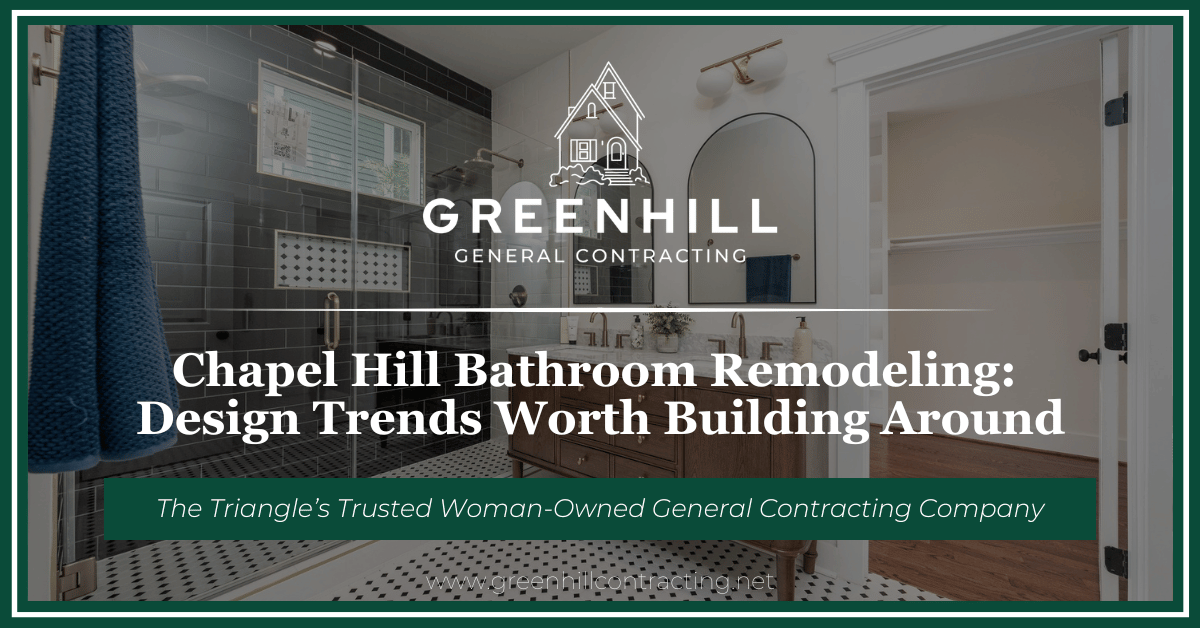
Bathroom trends change quickly. A finish that feels fresh today can start looking dated within a few years, especially when an entire room is designed around one popular color, tile pattern, or fixture style. That does not mean Chapel Hill homeowners should ignore trends altogether. It means the best bathroom remodels use them carefully.
A well-designed bathroom should make mornings easier, evenings more comfortable, and maintenance less frustrating. It should have enough storage for the items you actually use, lighting that works at every hour of the day, and materials that can handle moisture without demanding constant attention. The room can still feel luxurious, but luxury should come from how naturally the space supports your routine, not from how many features are squeezed into it.
That distinction matters when planning Chapel Hill bathroom remodeling. Homes throughout Chapel Hill range from older properties with compact bathrooms and aging systems to newer homes with larger primary suites that still lack warmth or practical storage. The right design will look different in each one. Instead of copying a showroom, the goal should be to take the strongest bathroom design trends and make them work for the home, the people living in it, and the way the room will be used for years to come.
Bathroom Design Is Becoming More Personal
For years, the idea of a luxury bathroom was fairly predictable. It usually involved white marble, a freestanding tub, polished fixtures, and a large glass shower. Those features can still be beautiful, but homeowners are becoming less interested in recreating the same bathroom everyone else has.
The National Kitchen & Bath Association’s 2026 Bath Trends Report points toward a more personal approach. Storage, technology, wellness features, color, and material choices are increasingly being shaped by individual routines instead of broad resale trends.
That shift is a good one. A bathroom should not be designed around an imaginary future buyer while ignoring the homeowner using it every day.
The Daily Routine Should Shape the Layout
Before choosing tile or fixtures, it helps to look honestly at how the bathroom is used. Does one person need a seated makeup area? Do two people get ready at the same time? Is there never enough room for towels, toiletries, or grooming tools? Is the bathtub used regularly, or is it taking up valuable space?
These questions often have more influence on the final design than the room’s style.
A custom vanity may need deep drawers rather than rows of small cabinets. One large mirror may work better than two smaller ones. A separate water closet may be valuable in a shared primary bathroom, but unnecessary in a guest bathroom. Thoughtful design begins with these choices, not with a list of products.
Green Hill Contracting’s bathroom remodeling services are built around this type of planning. The goal is not simply to replace what is already there. It is to understand where the current bathroom falls short and design a space that works better.
Custom Does Not Have to Mean Complicated
Personalization is sometimes confused with excess. In reality, a custom bathroom can feel restrained and simple.
A recessed cabinet positioned exactly where it is needed, an electrical outlet hidden inside a vanity drawer, or a shower niche sized for the homeowner’s products may be more valuable than an elaborate decorative feature. These details rarely dominate a photograph, but they are the parts of the room people appreciate once they begin living with it.
Warm, Natural Materials Are Replacing Cold Showroom Design
Bright white bathrooms are not disappearing, but the cold, highly polished version of the spa bathroom is losing some of its appeal. Homeowners are leaning toward warmer spaces that feel grounded and comfortable.
Wood-faced vanities, warm neutral tile, brushed metal finishes, textured stone, and handmade-looking surfaces are bringing more character into bathroom design. NKBA’s current research also points to natural materials, wood vanities, and matte or brushed fixture finishes as leading preferences.
Warmth Can Come From More Than Color
A bathroom does not need to be beige or brown to feel warm. Warmth can come from texture, contrast, and the way materials are layered.
A white tile shower can feel softer when paired with a natural wood vanity. A darker floor can give a light room more weight. Brushed nickel, aged brass, or satin bronze can feel less severe than highly polished chrome. Even the grain direction on cabinetry can influence how relaxed or formal the room feels.
The important thing is to choose materials that work with the rest of the home. This is especially true in Chapel Hill homes with traditional architecture, where an ultra-modern bathroom can feel disconnected from everything around it.
Homeowners renovating an older property may also find useful guidance in Green Hill Contracting’s article on remodeling an older North Carolina home without losing its character.
Natural Stone Is Beautiful, but Maintenance Matters
Marble and other natural stones can create a remarkable bathroom, but they are not maintenance-free. Some materials require sealing, careful cleaning, and a willingness to accept natural variation or etching over time.
Porcelain and engineered surfaces can offer a similar visual direction with less upkeep. Neither option is automatically better. The right choice depends on how the homeowner feels about maintenance and how the surface will be used.
A material should not be selected only because it looks good in a sample. It should be selected with a clear understanding of what living with it will involve.
Larger Showers Are Taking Priority Over Oversized Tubs
One of the clearest bathroom remodeling trends is the move toward larger, more comfortable showers. In many primary bathrooms, homeowners are willing to reduce or remove a little-used tub to create a shower with more room, better controls, built-in seating, and improved accessibility.
The 2025 Houzz Bathroom Trends Study found that shower expansions remain a major part of bathroom renovations, while wet rooms now appear in roughly one out of every six renovated bathrooms.
The Best Shower Is Not Necessarily the Largest One
A large shower can be wonderful, but only when its size makes sense for the room. An oversized shower that leaves the vanity cramped or eliminates needed storage is not an improvement.
The strongest designs maintain balance. They allow comfortable movement, keep towels within reach, position controls where the water can be turned on without stepping into a cold spray, and provide enough room for a bench or handheld shower without making the enclosure feel empty.
This is where good planning separates a thoughtful bathroom from one that simply follows a trend.
Wet Rooms Need More Than a Beautiful Rendering
Wet rooms are receiving plenty of attention because they create an open, seamless look. They can also improve accessibility and make better use of certain layouts. Houzz reports that homeowners often choose them for space efficiency, appearance, and easier access.
However, a wet room is not just a shower without a door. The entire area must be carefully waterproofed and sloped so water moves toward the drain instead of collecting around the room. Heating, ventilation, splash control, fixture placement, and slip resistance all need to be considered.
A poorly planned wet room can feel cold, stay damp, and send water farther than expected. A well-designed one can become the most comfortable part of the home.
Curbless Showers Are Becoming a Standard Luxury Feature
Curbless showers are often discussed as an accessibility feature, but that description does not tell the full story. They also make a bathroom feel larger, reduce visual interruption, and create a cleaner transition across the floor.
The National Association of Home Builders reports growing interest in aging-in-place improvements such as curbless showers, wider doors, shower benches, and reinforced areas for grab bars.
Universal Design Can Be Nearly Invisible
A bathroom does not need to look clinical to work for a wider range of people. AARP’s guidance on universal design emphasizes that accessible features can be integrated in ways that remain attractive, flexible, and useful to people of different ages and abilities.
A wider shower opening is useful when carrying a child, helping an injured family member, or simply moving through the room with laundry. A handheld shower is useful for cleaning the enclosure, bathing pets, and rinsing children. A bench can serve as seating or storage even when mobility is not a concern.
These choices are not just about preparing for old age. They make the bathroom easier to use now.
Safety Should Be Designed In, Not Added Later
Bathrooms combine hard surfaces, water, and frequent changes in position. That makes lighting, slip resistance, clear floor space, and well-placed support especially important. The CDC’s fall-prevention guidance specifically recommends good lighting and bathroom grab bars as part of creating a safer home.
Reinforcing walls during construction allows support bars to be added later without opening the wall again. It is a relatively small planning decision that can prevent a much larger project in the future.
Low-Maintenance Surfaces Are Winning Over Complicated Tilework
Detailed mosaics and intricate tile patterns can create visual interest, but homeowners are becoming more selective about where they use them. Large-format tile, slab shower walls, and fewer grout lines are gaining ground because they create a calmer appearance and are easier to maintain.
NKBA’s 2026 findings show strong interest in larger flooring formats and reduced grout lines, driven largely by durability and practicality.
Fewer Grout Lines Can Make the Room Feel Larger
Large-format surfaces allow the eye to travel across the room with fewer interruptions. This can be especially helpful in smaller Chapel Hill bathrooms, where too many patterns or changes in material can make the room feel busy.
Fewer grout lines also mean fewer areas that may discolor or require detailed cleaning. That does not mean every surface should be completely seamless. A smaller accent tile can still work beautifully in a niche, behind a vanity, or on one carefully chosen wall.
The difference is using detailed materials intentionally rather than covering every surface with them.
Waterproofing Is More Important Than the Tile
Homeowners naturally focus on the visible tile, but the parts behind it determine whether the shower performs over time. Waterproofing, substrate preparation, drain placement, slope, and installation quality matter more than the tile brand.
The National Association of the Remodeling Industry notes that traditional tile showers involve multiple installation phases and that waterproofing or grout failures can lead to expensive problems.
A beautiful shower is only successful when the system behind it is designed and installed correctly.
Bathroom Storage Is Becoming More Specific
Storage has always mattered, but the standard vanity cabinet is no longer enough for many households. Homeowners want storage designed around real items and routines, including hair tools, skincare products, medication, linens, cleaning supplies, and charging needs.
Drawers Often Work Better Than Deep Cabinets
Deep vanity cabinets tend to become dark spaces where products disappear behind plumbing. Wide drawers and pullouts make it easier to see and reach what is stored.
Internal outlets can keep styling tools charged without leaving cords across the countertop. Dividers can create a place for smaller items. Tall storage can hold towels without taking up much floor space.
These are not dramatic features, but they often make the largest difference in everyday use.
Floating Vanities Need to Earn Their Place
Floating vanities can make a bathroom feel lighter and reveal more flooring, which is useful in compact rooms. They can also make cleaning easier.
Still, they should not be selected only because they are popular. The design needs to preserve enough storage and provide proper wall support. In some bathrooms, a furniture-style vanity reaching the floor may offer better function and fit the architecture more naturally.
Lighting Is Moving Beyond a Single Vanity Fixture
Bathroom lighting has traditionally been treated as a simple matter: one ceiling fixture and a light over the mirror. That approach usually creates shadows, glare, and a room that feels flat.
The better trend is layered lighting. This combines general illumination, focused vanity lighting, shower lighting, and softer options for evenings or early mornings.
Vanity Lighting Should Illuminate the Face Evenly
Lighting above a mirror often casts shadows below the eyes and chin. Sconces beside the mirror, or a well-designed illuminated mirror, can provide more even light for grooming.
The color temperature should also be considered. Extremely cool light can feel harsh, while overly warm light can make it difficult to see colors accurately. Dimmers allow the room to shift from practical morning lighting to a softer evening atmosphere.
Night Lighting Is a Small Feature With Daily Value
Low-level lighting beneath a vanity, inside a toe kick, or near the floor can provide enough visibility at night without turning on bright overhead lights.
This is a good example of technology serving the room quietly. It improves comfort without making the bathroom feel like a gadget showroom.
Ventilation Cannot Be Treated as an Upgrade
A bathroom can have expensive finishes and still fail if moisture is not managed properly. In North Carolina’s humid climate, ventilation deserves to be planned with the same attention as lighting and plumbing.
The U.S. Environmental Protection Agency recommends using bathroom exhaust ventilation to reduce recurring moisture and mold problems. NC State Extension also provides local guidance on moisture control in North Carolina homes.
A Quiet Fan Is More Likely to Be Used
A fan that sounds like a small engine will often be switched off too soon. Quieter, properly sized ventilation with a timer or humidity sensor is more likely to operate long enough to remove moisture.
ENERGY STAR’s ventilating fan guidance includes performance, efficiency, and sound considerations for residential fans.
The duct path matters too. A strong fan connected to a poorly designed or restricted duct may not deliver the expected airflow.
Ventilation Protects the Entire Investment
Moisture affects more than the shower. It can damage painted surfaces, cabinetry, trim, drywall, and insulation. The EPA’s updated moisture-control guidance is direct: mold growth depends on moisture, and controlling indoor humidity is central to preventing it.
Good ventilation is not the most visible part of a Chapel Hill bathroom remodel, but it is one of the most important.
Water Efficiency Can Still Feel Luxurious
Water-efficient fixtures once had a reputation for weak performance. That is no longer a fair assumption.
The EPA’s WaterSense bathroom faucet program requires labeled fixtures to meet both efficiency and performance standards. WaterSense bathroom sink faucets use no more than 1.5 gallons per minute, reducing flow by at least 30 percent compared with the standard 2.2 gallons per minute.
Fixture Selection Should Balance Experience and Consumption
A bathroom can include a generous shower experience without ignoring water use. The key is choosing controls and fixtures as a coordinated system.
A rainfall shower, handheld sprayer, and body sprays may all be desirable, but they should not automatically run at the same time. Good design considers water pressure, hot-water capacity, drainage, and how the homeowner will actually use each component.
For Chapel Hill and Carrboro residents served by OWASA, local water conservation is also a practical consideration. OWASA’s conservation resources encourage efficient water use and long-term planning around the community’s water supply.
Permits and Existing Conditions Can Shape the Design
Bathroom remodeling often involves plumbing, electrical work, ventilation, or structural changes. These are not details to figure out after demolition begins.
The Town of Chapel Hill’s residential permit guidance states that interior remodeling and work involving structural, electrical, plumbing, or mechanical systems may require permits and inspections. Properties outside town jurisdiction may instead fall under Orange County’s building inspection process.
Moving Plumbing Can Change the Scope Quickly
Relocating a toilet, shower, or vanity may improve the layout, but it also affects drain lines, water supply, venting, framing, and flooring. In some homes, those changes are straightforward. In others, joist direction, slab construction, or existing mechanical systems may make them more involved.
This does not mean homeowners should never move plumbing. It means the decision should solve a meaningful problem.
Older Chapel Hill Homes May Need More Than New Finishes
A bathroom in an older home may reveal aging supply lines, insufficient ventilation, damaged subflooring, outdated wiring, or previous work that was not completed correctly.
A realistic remodeling plan accounts for the possibility that some of the budget will go toward improvements no one sees when the room is finished. Those investments are still valuable because they protect the visible work and improve the bathroom’s long-term performance.
Which Bathroom Trends Are Worth Following?
A trend is worth considering when it improves the way the bathroom works. Larger showers, curbless entries, better storage, warmer materials, layered lighting, fewer grout lines, efficient fixtures, and smart ventilation all have practical value beyond appearance.
Other trends should be treated more carefully. Highly specific tile patterns, unusual fixture colors, complicated technology, and materials that require more maintenance than the homeowner wants may become frustrating long before they become unfashionable.
Green Hill Contracting has previously explored this same long-term thinking in Which Home Improvements Age Well Over Time and Which Ones Don’t. The principle is simple: invest most heavily in the parts that are difficult to change, then use easier-to-update details to bring in personality.
Planning a Chapel Hill Bathroom Remodel That Feels Current and Lasts
The best bathroom design trends are not really about following fashion. They reflect a broader change in what homeowners expect from the room.
Bathrooms are becoming more personal, easier to maintain, safer to move through, and better connected to daily wellness. They are also being planned with more respect for the systems behind the finishes. Waterproofing, ventilation, lighting, storage, and layout may not be the first things people notice in a finished bathroom, but they are what determine whether the room is still enjoyable years later.
For homeowners considering bathroom remodeling in Chapel Hill, the right starting point is not a product list. It is a clear understanding of what the current bathroom gets wrong and what the new one needs to do better.
Green Hill Contracting brings design and construction together so those decisions can be made as part of one coordinated process. You can explore the company’s broader remodeling services, view completed work in the project gallery, or learn more about Green Hill’s approach to home renovations.
Final Thoughts
A successful bathroom remodel should not feel like a collection of trends. It should feel like the room always belonged in the home, only now it works better.
The materials should make sense for the amount of maintenance you are willing to do. The shower should fit how you bathe. The storage should reflect what you own. The lighting should work in the morning and at night. The ventilation should protect everything you invested in.
That is what makes a bathroom feel custom. It is not the price of a fixture or the popularity of a tile. It is the sense that every decision has a reason behind it.
Homeowners ready to begin a Chapel Hill bathroom remodeling project can contact Green Hill Contracting to discuss the space, the problems they want to solve, and the kind of bathroom they want to live with for years.